Risk to reward ratio
Risk to reward ratio compares what a trade can lose with what it can make. Risk 50 cents to make 150 and the ratio is one to three.
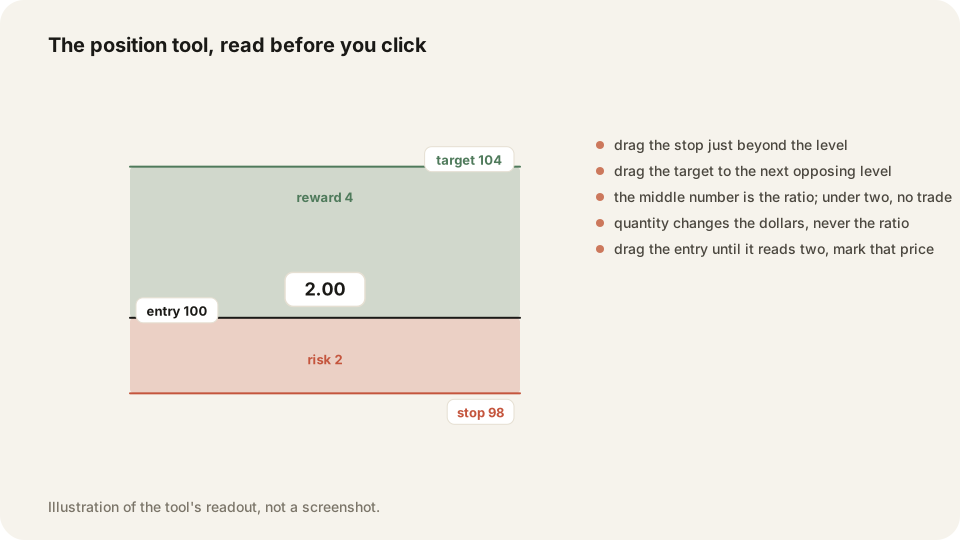
In depth
You work the number out before you enter, not after. Take the entry, the stop and the target from the chart. The distance to the stop is the risk. The distance to the target is the reward. Divide one by the other.
Buy at 100 with a stop at 99 and a target at 102. You risk 1 to make 2, so the ratio is one to two. Many traders treat two to one as their minimum. Now enter late at 100.60 instead. The stop and the target have not moved, so the same trade pays about one to one.
Why it matters
A good ratio lets you be wrong often and still finish ahead. At two to one you break even winning a third of the time. Ignore it and you can win the majority of your trades and still lose money. The few losers are bigger than all the winners.
TraderLog measures the ratio you actually got. The stats page puts your average winner next to your average loser, with profit factor and expectancy. Tag the trades where you entered late, and the By tag table shows you what chasing costs.
Frequently asked questions
Two to one is a common minimum. Below one to one you need a very high win rate to stay ahead.
No. The stop belongs where the idea is proved wrong. Move it and you have only hidden the risk.
Keep your Risk to reward ratio trades on the record in TraderLog
Trades import from Schwab and IBKR on their own, every day lands on a calendar with its P&L, and the day's entry sits beside it. Replay any trade on a TradingView chart. Free to start, no card.
Every trading morning at 8:40 ET our model draws the SPY, QQQ and IWM zones it expects to matter, on a TradingView chart, before the open. Where price reaches one, it has turned 74 percent of the time. Free, no account. See today's map