Breakeven stop
A breakeven stop is moving your stop to your entry price once the trade has moved in your favour. From then on the trade cannot lose money.
In depth
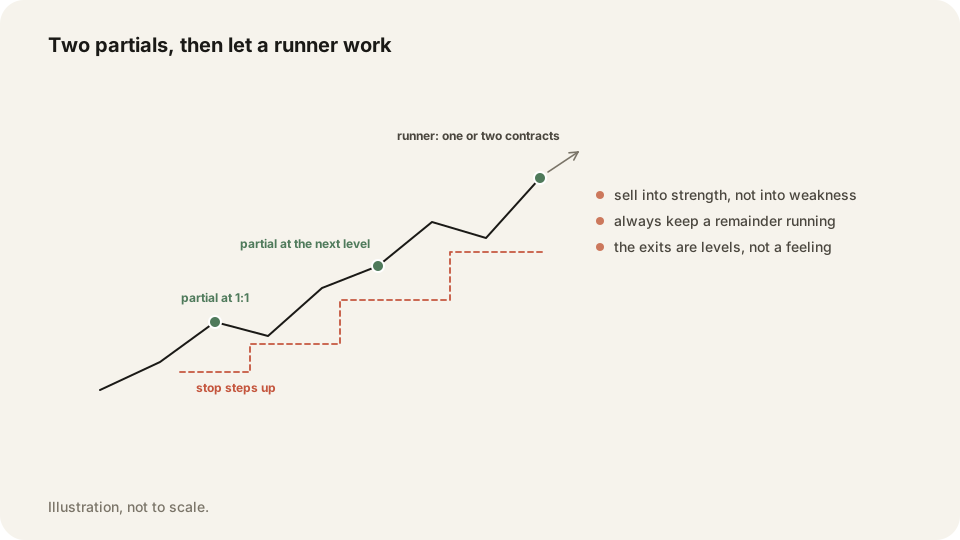
Buy at 100 with a stop at 98. Price reaches 102, so you lift the stop to 100. If it comes back you get out flat instead of down 2. The trade has become free, which is the whole appeal of it.
The cost is that 100 is now an ordinary price with orders resting on it, and a normal pullback can tap it. You are out at zero, then the move you were right about happens without you. Moving the stop to just under the level you entered from usually beats moving it to your exact fill.
Why it matters
Used too early, a breakeven stop turns winners into flat trades and strips out your biggest results. Used too late it does nothing at all. The honest version is a judgment call: move it once price has cleared a level or made a higher low, not simply because you are up a bit.
TraderLog shows your average winner next to your average loser, so a habit of cutting trades at zero turns up as winners that keep shrinking. Trade replay on a TradingView chart with your fills marked lets you check whether the stop moved too soon.
Frequently asked questions
After price clears a level or makes a higher low in your direction, not just because the position has gone green.
Almost. A gap or a fast market can fill you below your entry, so call it a small loss at worst.
Keep your Breakeven stop trades on the record in TraderLog
Trades import from Schwab and IBKR on their own, every day lands on a calendar with its P&L, and the day's entry sits beside it. Replay any trade on a TradingView chart. Free for 14 days, no card.
Every trading morning at 8:40 ET our model draws the SPY, QQQ and IWM zones it expects to matter, on a TradingView chart, before the open. Where price reaches one, it has turned 74 percent of the time. Free, no account. See today's map