Consolidation
Consolidation is price moving sideways in a range. Neither side is winning, so there is nothing to be right about until price leaves the range.
In depth
A range has two edges. Price bounces between them, and the middle is the worst place to be involved. Your entry and your stop end up close together, and price has no reason to go anywhere yet.
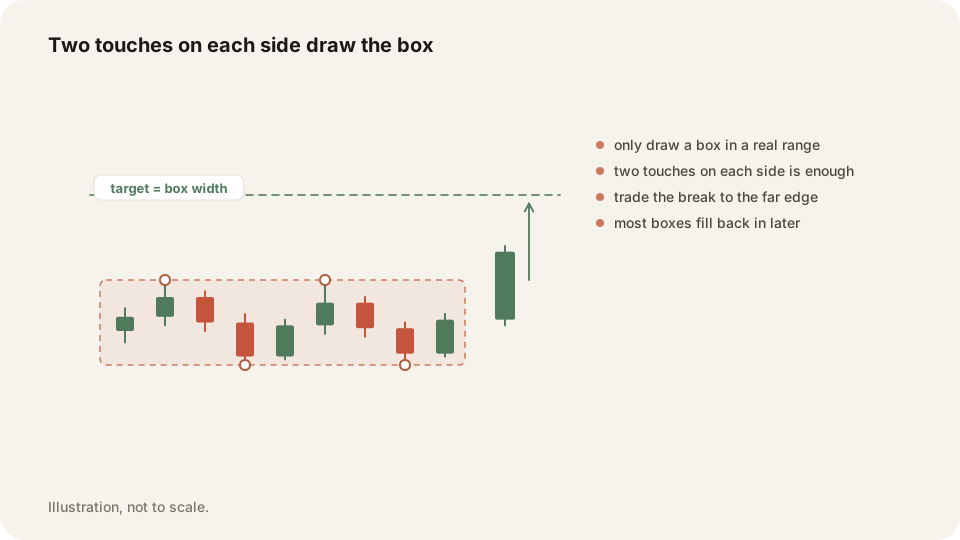
Draw the range from two touches on top and two underneath. Wait for a candle to close outside an edge. The move then often runs about the height of the box, and that is your target. Hold options through a sideways stretch and time decay charges you rent while nothing happens. Same-day expiry makes that expensive.
Why it matters
Sideways markets drain accounts without a single dramatic loss. Every trade looks reasonable and none of them go far. Look at your worst days. If they are full of small trades in a tight range, the entries were not the problem. Being there at all was.
The stats page shows results by hold time and by symbol. A run of small flat trades is easy to find. Automatic tags mark scalps and late-session trades. Habit findings tell you whether your edge fades late in the day.
Frequently asked questions
Anything from a few candles to weeks. The useful part is the edge of the range, not guessing the timing.
The edges pay, the middle does not. Entry and stop sit too close together in there to be worth it.
Keep your Consolidation trades on the record in TraderLog
Trades import from Schwab and IBKR on their own, every day lands on a calendar with its P&L, and the day's entry sits beside it. Replay any trade on a TradingView chart. Free for 14 days, no card.
Every trading morning at 8:40 ET our model draws the SPY, QQQ and IWM zones it expects to matter, on a TradingView chart, before the open. Where price reaches one, it has turned 74 percent of the time. Free, no account. See today's map