Days to expiry (DTE)
Days to expiry, or DTE, is how many days an option has left before it expires. A contract with 30 DTE expires in thirty days, and one with 0 DTE expires today.
In depth
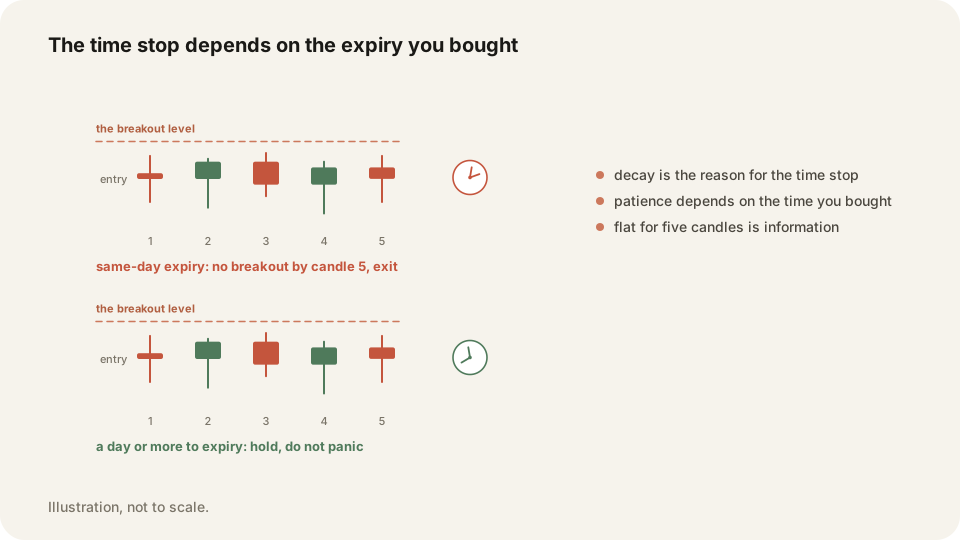
An option's price has two parts: what it is worth if you exercised it now, and what you pay for the time left. That second part shrinks every day, and it shrinks faster as expiry gets close. Going from 40 days to 39 barely registers. Going from 2 days to 1 is brutal.
So DTE decides how patient you can afford to be. Buy 30 days out and a trade that takes a week to work still pays. Buy the same idea with 1 day left and being right on Thursday instead of Wednesday is the same as being wrong. Longer-dated contracts cost more up front, which is what you are paying for.
Why it matters
Traders pick short-dated contracts because they are cheap, then lose on trades where the direction was right. The clock, not the chart, took the money. Matching DTE to how long your setup usually takes to play out is a sizing decision as real as how many contracts you buy.
TraderLog does not store DTE on a trade, but it groups results by how long you held, and an automatic expired worthless tag marks the contracts that ran out of time. Put the expiry in the day's note and the pattern shows up over a month.
Frequently asked questions
The option expires at the end of today, so any time value left disappears within hours.
Enough that your setup has room to work. If your trades take three days, one day is not enough.
Keep your Days to expiry (DTE) trades on the record in TraderLog
Trades import from Schwab and IBKR on their own, every day lands on a calendar with its P&L, and the day's entry sits beside it. Replay any trade on a TradingView chart. Free for 14 days, no card.
Every trading morning at 8:40 ET our model draws the SPY, QQQ and IWM zones it expects to matter, on a TradingView chart, before the open. Where price reaches one, it has turned 74 percent of the time. Free, no account. See today's map