Disaster stop
A disaster stop is a hard stop order well beyond your level, there to cap the loss if something goes badly wrong. It is a backstop, not your normal exit.
In depth
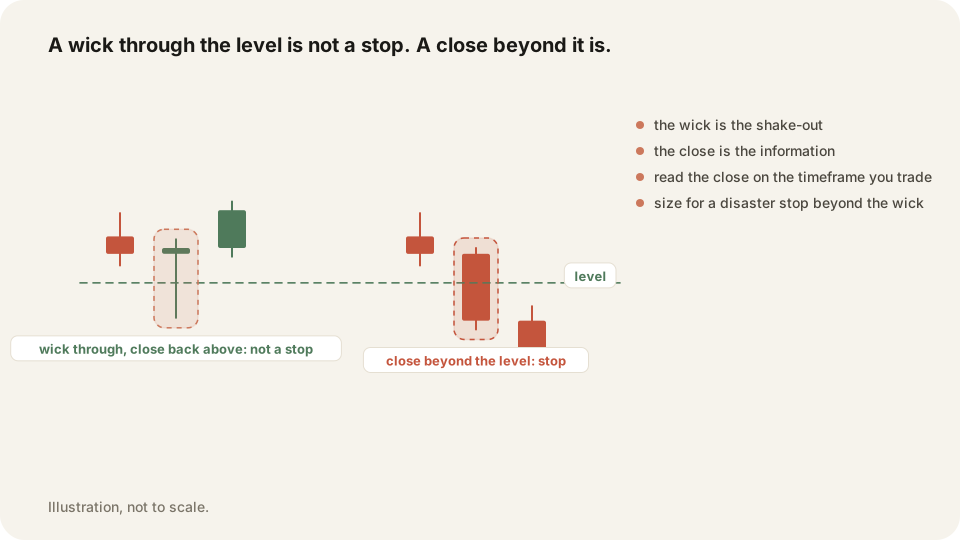
Some traders exit on a candle close beyond their level rather than on a touch, because a poke through support often reverses straight back. That keeps you in good trades, but it leaves you with no live order in the market. If the stock drops five percent in a minute, you are watching, not protected.
The disaster stop fills that hole. Support sits at 100. You plan to exit on a close below it, and you rest a stop order at 98.50, far enough that ordinary noise will not touch it. If it fills, that trade is over. Because the stop is wide, the position has to be small enough that hitting it still costs your usual risk.
Why it matters
Exiting on closes is a good rule right up to the day it is not. A halt, a headline or a flash move can take a position past anything you would have accepted, while you sit there deciding. The disaster stop is the price you agreed to in advance, so one trade cannot end the account.
Your fills import from Schwab, IBKR or a CSV file, so every exit lands in the record at the price it filled. The stats page shows max drawdown and your worst day, and an automatic big loser tag flags the trades that got away.
Frequently asked questions
Far enough that normal noise cannot reach it. There is no fixed number, so size to match.
Yes. A close-based exit does nothing during a halt or a fast drop, with no live order working.
Keep your Disaster stop trades on the record in TraderLog
Trades import from Schwab and IBKR on their own, every day lands on a calendar with its P&L, and the day's entry sits beside it. Replay any trade on a TradingView chart. Free for 14 days, no card.
Every trading morning at 8:40 ET our model draws the SPY, QQQ and IWM zones it expects to matter, on a TradingView chart, before the open. Where price reaches one, it has turned 74 percent of the time. Free, no account. See today's map