Liquidity grab
A liquidity grab is a quick push beyond an obvious high or low that triggers the stop orders resting there. Price then turns back, because those stops were the fill a larger order needed.
In depth
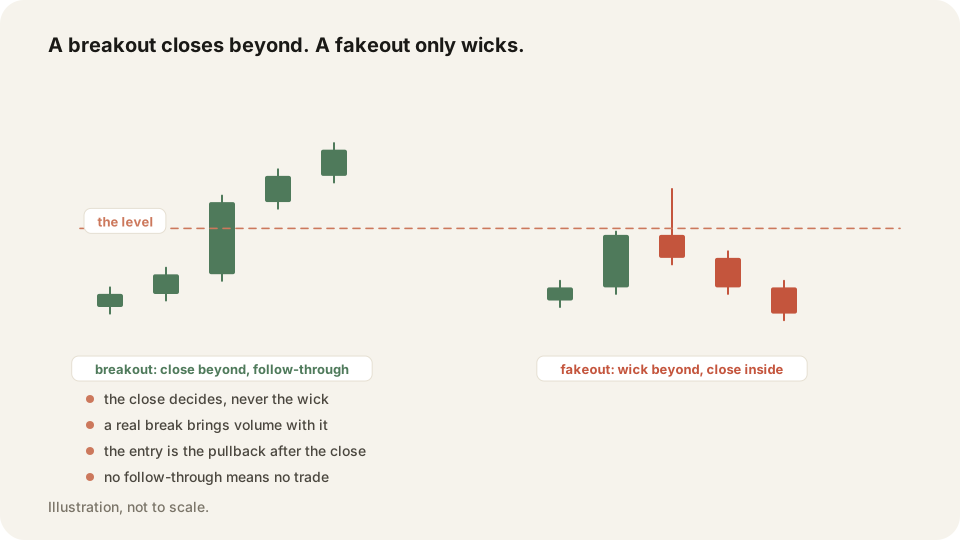
Stops cluster where everyone can see them: yesterday's high, the round number, the obvious swing low. A big buyer needs sellers, and a wave of triggered stops supplies them in one go. So price pokes down through 99.90, fills the stops sitting under 100, and closes back at 100.40.
That is why the exit rule is a candle close beyond your level rather than a wick through it. The wick is the grab. The close is the information. Following it costs you a wider loss on the days the break was real, so size the trade for that distance up front.
Why it matters
If your stop sits at the price everyone else picked, you are the liquidity. Traders get filled at the low of the day, then watch the move run without them and call it bad luck. It was a crowded stop, and the crowding was visible on the chart before they entered.
Tag the trades where a wick took you out and the By tag table shows what that group cost you over a month. Trade replay marks your fills on a TradingView chart, so you can see whether price came straight back after stopping you.
Frequently asked questions
A fast move past an obvious level that fills the stop orders resting there, then reverses back inside.
Wait for the close. A real break closes beyond the level and holds the retest. A grab closes back inside.
Keep your Liquidity grab trades on the record in TraderLog
Trades import from Schwab and IBKR on their own, every day lands on a calendar with its P&L, and the day's entry sits beside it. Replay any trade on a TradingView chart. Free for 14 days, no card.
Every trading morning at 8:40 ET our model draws the SPY, QQQ and IWM zones it expects to matter, on a TradingView chart, before the open. Where price reaches one, it has turned 74 percent of the time. Free, no account. See today's map