Revenge Trading

Revenge trading is the impulsive decision to trade aggressively after a loss, driven by emotion rather than strategy. Traders attempt to quickly recoup lost money by taking larger positions or breaking their trading rules.

In depth

Revenge trading occurs when a trader abandons their trading plan following a loss and enters trades with the sole purpose of making back that money fast. The motivation is emotional—anger, frustration, or shame—rather than technical or fundamental analysis. A trader might increase position size, ignore stop losses, or enter lower-probability setups simply because they feel compelled to act.

This behavior creates a dangerous feedback loop. After a $500 loss, a trader might risk $1,000 on the next trade to "break even faster." If that trade fails, the emotional pressure intensifies. Each new loss compounds the desperation, leading to increasingly reckless decisions. The trader is no longer trading their edge; they're trading their ego.

Revenge trading is distinct from normal loss recovery. Professional traders expect losses and have predefined rules for position sizing and entry criteria. Revenge traders, by contrast, suspend their rules entirely. They might trade illiquid assets, ignore risk-reward ratios, or jump into trades during high-volatility windows when their strategy performs worst. The outcome is predictable: more losses, larger drawdowns, and damaged trading accounts.

Why it matters

Revenge trading is one of the fastest ways to blow up a trading account. A single revenge-trading session can erase weeks of consistent profits. Beyond the immediate financial damage, it creates a psychological wound—traders often avoid their accounts for days afterward, missing legitimate opportunities while their confidence collapses.

The behavior also distorts your trading data. If you track your trades (which every serious trader should), revenge trades make it impossible to assess whether your actual strategy works. You can't tell if losses came from a flawed edge or from emotional breakdowns. This makes it impossible to improve systematically. Recognizing revenge trading as a distinct problem—not a trading failure—is the first step toward preventing it.

How TraderLog tracks this

TraderLog's trading journal forces you to document your trade intent before entering. When you log a trade, you state your reasoning: the setup, the risk-reward, the technical trigger. If you're tempted to revenge trade, you have to write it down—and that friction creates a moment of clarity. Most traders won't log a trade that breaks their own rules.

TraderLog also separates emotional trades from planned trades through detailed tagging and filtering. You can run reports that isolate trades entered after losses, showing exactly how revenge trading impacts your P&L. Seeing the pattern in data—rather than feeling it emotionally—makes it concrete enough to change. The journal becomes your accountability partner.

Frequently asked questions

Ask yourself: Am I entering this trade because my setup fired, or because I lost money recently? If the second answer is yes, stop. Also check position size: are you risking more than usual? Revenge trades are almost always oversized. Review your trading journal—it will show a clear pattern of larger losses after smaller ones.

Stop trading and review your journal. Did your edge break, or did you break your rules? If you had 5 losses in a row on valid setups, reduce position size and keep trading. If you revenge traded or deviated from your plan, take a break for the rest of the day. No trading angry. Ever.

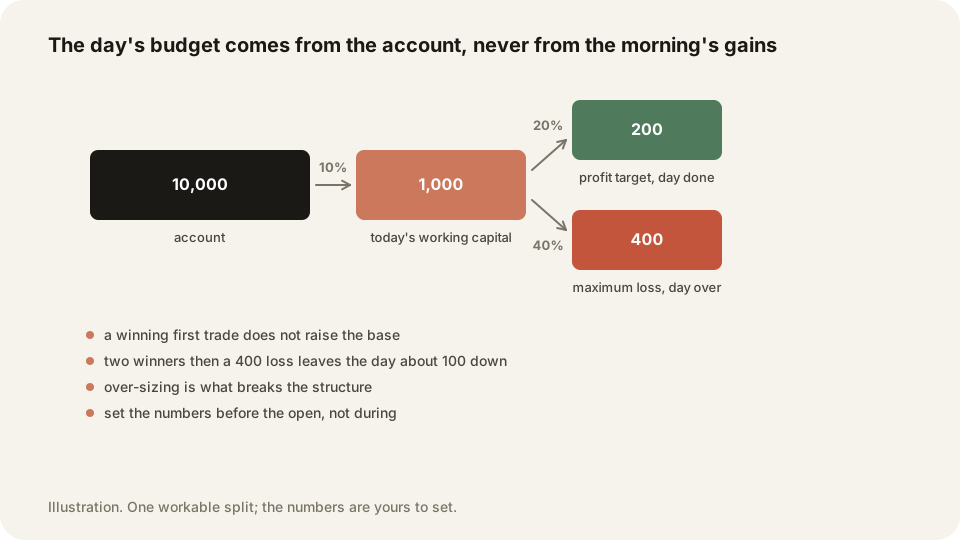
Yes. Even traders with profitable strategies revenge trade. The difference is they catch it faster. A strong plan includes a daily loss limit—if you hit it, you stop trading that day. Period. This rule prevents the emotional spiral that leads to revenge trading in the first place.

Track Revenge Trading in your trading journal.

TraderLog calculates Revenge Trading automatically across your trade history, and shows you exactly when and why it changes.