Risk per trade
Risk per trade is the money you lose if your stop is hit. Traders fix it as a small slice of the account so no single trade matters much.
In depth
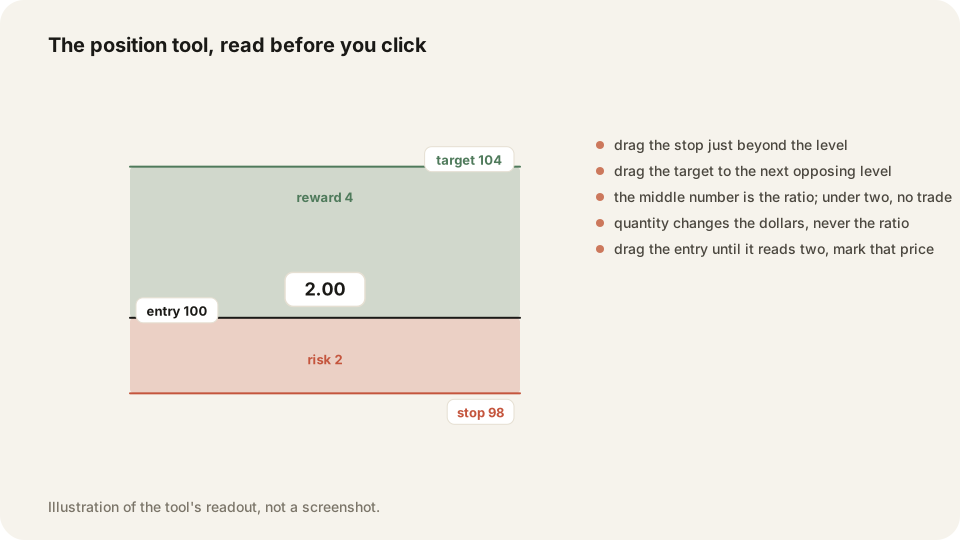
Pick the percentage first. A 10,000 dollar account risking 1 percent puts 100 dollars on the line per trade. That number never depends on how good the setup feels. The position size then follows from it: 100 dollars of risk with a 2 dollar stop gives you 50 shares.
Keeping it fixed is what makes your results comparable. If every loss is about 100 dollars, a 300 dollar winner is worth three losses and you can say so out loud. Once losses range from 40 dollars to 900, the average stops telling you anything useful.
Why it matters
Blown accounts are almost always a sizing story rather than a strategy story. Ten losses in a row at 1 percent costs about 10 percent, which is recoverable. The same run at 10 percent leaves you needing to double what is left. Fixed risk buys you the chance to keep learning.
The free position size calculator turns your account, your risk percent and your stop into a share count. Afterwards the stats page shows your average loser and your biggest drawdown, and automatic tags flag the trades where your size jumped after a loss.
Frequently asked questions
One to two percent of the account is common. Less while you are learning costs you nothing but time.
No. Risk is the dollars you can lose. Position size is the share count that produces it, given your stop.
Keep your Risk per trade trades on the record in TraderLog
Trades import from Schwab and IBKR on their own, every day lands on a calendar with its P&L, and the day's entry sits beside it. Replay any trade on a TradingView chart. Free for 14 days, no card.
Every trading morning at 8:40 ET our model draws the SPY, QQQ and IWM zones it expects to matter, on a TradingView chart, before the open. Where price reaches one, it has turned 74 percent of the time. Free, no account. See today's map