Scaling out (partials)
Scaling out means selling part of a position at a target and holding the rest. Traders call the pieces partials, and the leftover a runner.
In depth
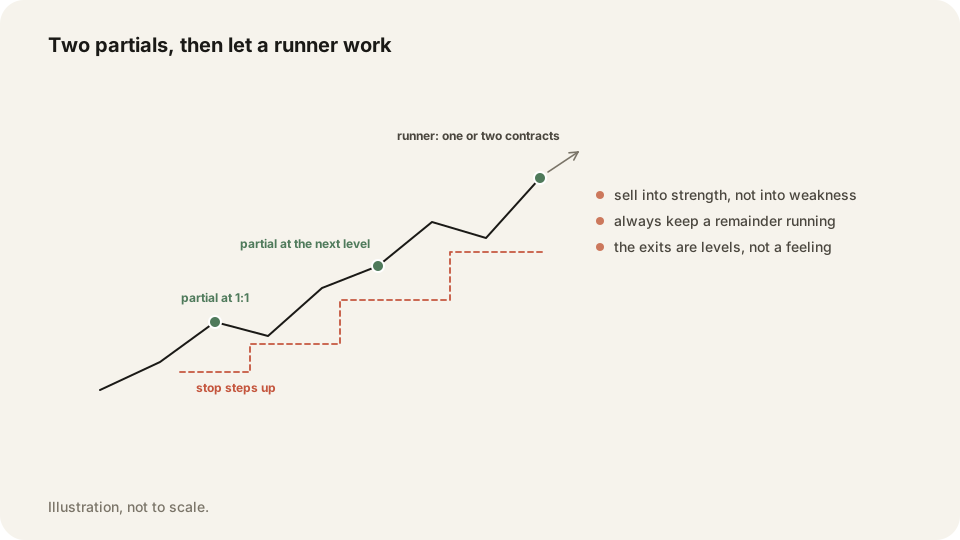
You decide the pieces before you enter. A common version takes half off where the trade has made as much as it risked. The stop on the rest then goes to breakeven. What is left rides toward the next level.
Buy 100 shares at 50 with a stop at 49. At 51 you sell 50 shares and bank the dollar. The stop on the other 50 goes to 50, so the worst case from there is flat. Sell into a candle that is still going your way. There is more demand while a move runs than after it stalls.
Why it matters
Scaling out swaps average profit for a steadier account. You get paid on more trades, which makes it easier to hold a runner without panic. The cost is real though. Your biggest winners get smaller. Do it on every trade and you cut out the ones that pay for the year.
The stats page shows your average winner, average loser and profit factor. A partials habit turns up there. Automatic tags mark the days you gave back an open profit. Results by hold time show what your runners are worth.
Frequently asked questions
Half is the usual first slice, often at one times risk. Fix the amount before the trade, not while it moves.
It can. Smaller winners are the price of steadier results, so check both in your own numbers.
Keep your Scaling out (partials) trades on the record in TraderLog
Trades import from Schwab and IBKR on their own, every day lands on a calendar with its P&L, and the day's entry sits beside it. Replay any trade on a TradingView chart. Free for 14 days, no card.
Every trading morning at 8:40 ET our model draws the SPY, QQQ and IWM zones it expects to matter, on a TradingView chart, before the open. Where price reaches one, it has turned 74 percent of the time. Free, no account. See today's map