Sizing down
Sizing down means deliberately trading smaller: fewer shares or contracts than usual. It cuts what a bad stretch can cost while you work out whether the problem is you or the market.
In depth
There are three ordinary reasons to do it. You are in a losing run and want the next few trades to cost less. A scheduled announcement is due and the moves will be wild. Or you are trying a setup you have not traded enough times to trust yet.
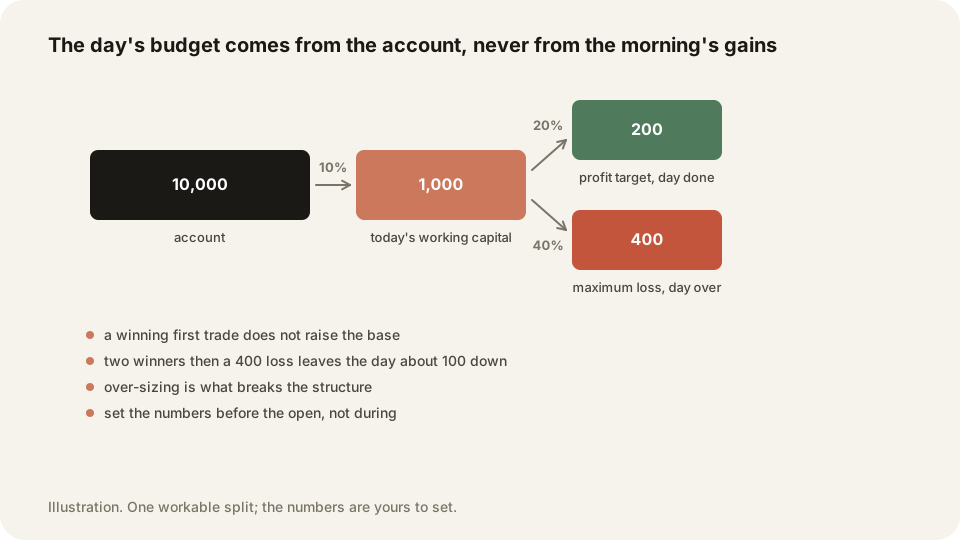
The arithmetic is friendly. If your usual risk is 200 dollars a trade, half size makes it 100. Five losses in a row cost 500 instead of 1,000, and you still have an account and a clear head. When the record turns, you size back up on evidence rather than on feeling better.
Why it matters
The instinct after a loss runs the other way. Traders size up to win it back fast, which turns a normal drawdown into a hole. Doubling size at the worst moment puts your biggest bet on your worst decision, and one day like that can undo a good month.
Automatic tags flag a size jump after a loss, so the opposite habit is easy to catch. Results after a loss sit next to results after a win on the stats page, and the free position size calculator turns a smaller risk figure into a share count.
Frequently asked questions
During a losing run, on scheduled news days, and while a new setup has too few trades to judge.
When the record supports it: a run of trades taken by your rules, not a run of good feelings.
Keep your Sizing down trades on the record in TraderLog
Trades import from Schwab and IBKR on their own, every day lands on a calendar with its P&L, and the day's entry sits beside it. Replay any trade on a TradingView chart. Free for 14 days, no card.
Every trading morning at 8:40 ET our model draws the SPY, QQQ and IWM zones it expects to matter, on a TradingView chart, before the open. Where price reaches one, it has turned 74 percent of the time. Free, no account. See today's map