Stop hunt
A stop hunt is a short move just past an obvious level that triggers the stop orders parked there. Price usually comes straight back inside the level afterwards.
In depth
Stops collect in predictable places. Support at 100 means sell stops sit at 99.90, 99.85 and 99.80, because everyone drew the same level and protected it by a few cents. A large buyer needs sellers to trade against. Pushing price through 100 turns those stops into market sells, the size gets filled, and price closes back at 100.20.
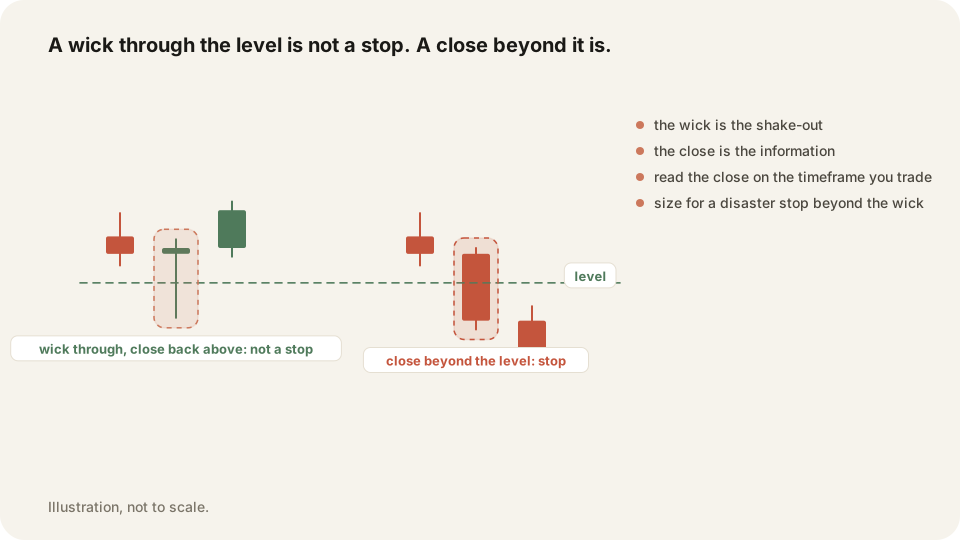
The word hunt implies an intent nobody can verify, so treat it as shorthand for a shape you can see: a long wick beyond a level, a close back inside, and volume arriving during the poke. Read that way, the wick is evidence the level is real, and the level often gets stronger.
Why it matters
The exit rule decides more of your results than the entry rule does. A wick that takes you out stops you on trades that later work, and the loss lands in your record as a bad idea when it was a bad exit. Moving the trigger to a candle close removes that loss, at the cost of a wider worst case, so size comes down.
Trade replay puts your fills on a TradingView chart, so you can see whether the stop was hit by a wick or a close. The stats page then shows what those exits cost, with results per symbol and by hold time.
Frequently asked questions
The shape is real and easy to see. The intent cannot be proved, so treat it as a pattern.
Exit on a candle closing beyond your level rather than a touch, and place the stop further out with smaller size.
Keep your Stop hunt trades on the record in TraderLog
Trades import from Schwab and IBKR on their own, every day lands on a calendar with its P&L, and the day's entry sits beside it. Replay any trade on a TradingView chart. Free for 14 days, no card.
Every trading morning at 8:40 ET our model draws the SPY, QQQ and IWM zones it expects to matter, on a TradingView chart, before the open. Where price reaches one, it has turned 74 percent of the time. Free, no account. See today's map