Time stop
A time stop is an exit triggered by elapsed time rather than by price. You close the trade because the move never started, while your price stop is still untouched.
In depth
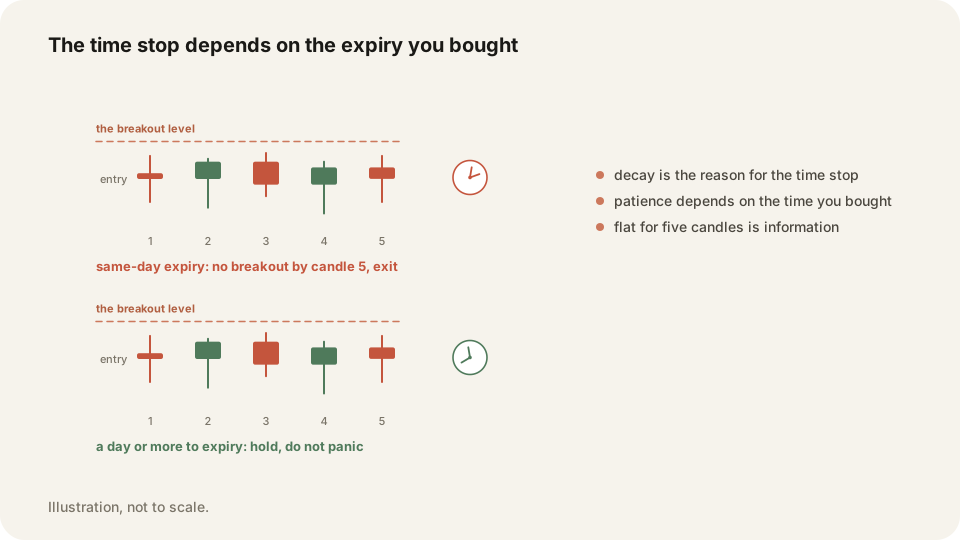
Count candles on the timeframe you entered on. A common version is five: enter on the five minute chart, and if nothing has broken out by the fifth candle, you are out. The reason is decay, not direction. A short-dated option loses value every hour it waits around.
How patient you get to be depends on what you bought. A same-day option buys you almost none, so the count stays tight. A contract with a week left can wait longer. A stock does not decay at all, so the cost of waiting is capital parked in a trade doing nothing.
Why it matters
Being right too early is a common way a short-dated options trade dies. A time stop turns that into a decision you already made, back when nothing was on the line. Without one, the choice arrives while the position bleeds, and you talk yourself into one more candle every time.
The stats page breaks results down by how long trades were held, so you can see where your winners usually start. Automatic tags flag options that expired worthless, and tagging the trades you sat in too long puts a number on the habit.
Frequently asked questions
Count candles on the timeframe you entered on, five being common. The less time to expiry, the tighter the count.
Yes, though the reason changes. A stock does not decay, so the cost is capital tied up in a trade doing nothing.
Keep your Time stop trades on the record in TraderLog
Trades import from Schwab and IBKR on their own, every day lands on a calendar with its P&L, and the day's entry sits beside it. Replay any trade on a TradingView chart. Free for 14 days, no card.
Every trading morning at 8:40 ET our model draws the SPY, QQQ and IWM zones it expects to matter, on a TradingView chart, before the open. Where price reaches one, it has turned 74 percent of the time. Free, no account. See today's map