Trailing stop
A trailing stop is an exit that follows price at a distance. As the trade goes your way the stop moves with it, so a winner cannot turn all the way back into a loser.
In depth
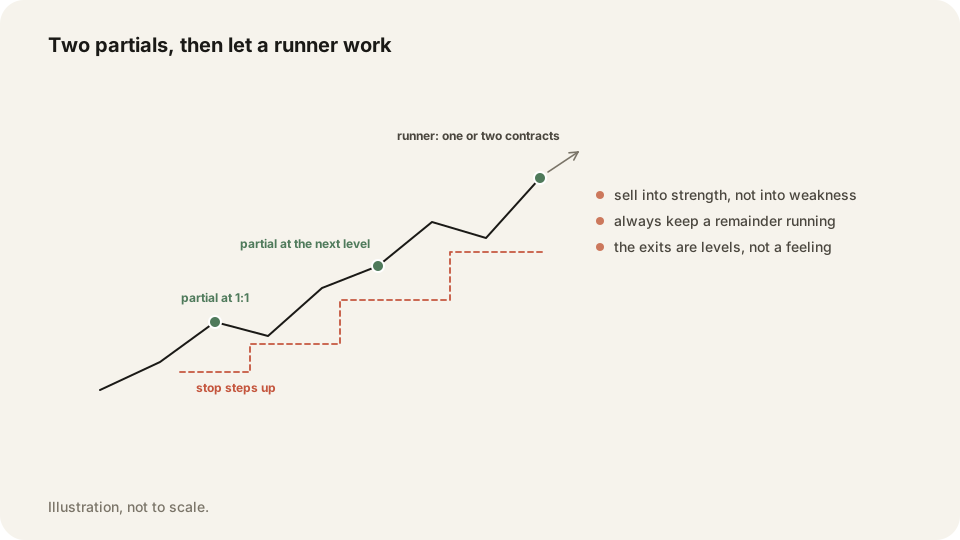
Buy at 100 with a stop at 98. Price reaches 104, so you move the stop to 102. Now the worst case is a 2 dollar gain instead of a 2 dollar loss. Price reaches 108 and the stop goes to 106. You never move it back down.
The distance is the whole question. A fixed number of dollars or a percentage is easy but arbitrary. Better is to sit the stop under the last level price broke and held, so the trade ends only when the structure carrying it breaks. That distance changes trade by trade, and it should.
Why it matters
Give-backs are where a lot of money goes. A trade is up 400 dollars, you wait for more, and it closes flat. A trailing stop makes that outcome impossible. In exchange you lose the trades that dip, take you out, then run without you, and that swap is the price of keeping winners.
Automatic tags mark trades that gave back an open gain, and habit findings compute give-backs from your fills. Trade replay puts your fills on a TradingView chart, so you can see where a trailing stop would have taken you out and what happened next.
Frequently asked questions
Far enough to sit under the last level price held. A fixed percentage is easier but ignores where the trade can breathe.
No. A normal pullback can trigger it, and in a fast gap it may fill below where you set it.
Keep your Trailing stop trades on the record in TraderLog
Trades import from Schwab and IBKR on their own, every day lands on a calendar with its P&L, and the day's entry sits beside it. Replay any trade on a TradingView chart. Free for 14 days, no card.
Every trading morning at 8:40 ET our model draws the SPY, QQQ and IWM zones it expects to matter, on a TradingView chart, before the open. Where price reaches one, it has turned 74 percent of the time. Free, no account. See today's map